
VQ35DE FX35 Sea Foam

fxlr8

Staff
Administrator
----------------------------------------------------------​

PLEASE CLICK THE "THANKS" BUTTON IF YOU LIKE THIS DIY!​

----------------------------------------------------------​

​


VQ35DE (FX35) SEA FOAM TREATMENT

MATERIALS:
SEA FOAM (16 FL OZ / 1PT)
¼” VACUUM LINE


TOOLS:

10MM SOCKET (IF YOU STILL HAVE YOUR PLASTIC ENGINE COVER ON).


SAFETY:
ALWAYS USE QUALITY JACKSTANDS WHEN WORKING UNDER YOUR VEHICLE.
NEVER WEAR LOOSE FITTED CLOTHING AROUND A RUNNING MOTOR.
ALWAYS WEAR SAFETY GLASSES.
PLEASE STAY SAFE.


-------------------------------------------------------------------------------------------------------------------------------------------
CRANK CASE (OIL):
RECOMMENDED -> 1.5 OZ PER OIL QT. X (FX35 5 QTS) = 7.5 OZ OF SEA FOAM
AMOUNT USED = 1/3 BOTTLE (5.33 OZ) FOR PROCEDURE.


1. REMOVE YOUR OIL FILLER CAP AND POUR IN 1/3 OF THE BOTTLE (OR THE RECOMMENDED AMOUNT).
2. DRIVE YOUR VEHICLE FOR A MINIMUM OF 30 MINUTES/MILES, MAXIMUM OF 100 MILES.
3. DRAIN YOUR OIL AND CHANGE YOUR OIL FILTER, REFILL WITH THE PROPER AMOUNT OF OIL.


FUEL TANK:

RECOMMENDED -> 1 OZ PER GALLON
AMOUNT USED = 1/3 BOTTLE (5.33 OZ) FOR PROCEDURE.


1. POUR 1/3 OF THE BOTTLE INTO YOUR FUEL TANK (OR THE RECOMMENDED 1 OZ PER GALLON).
2. THAT’S IT.


INTAKE MANIFOLD PLENUM:

RECOMMENDED -> 1/3 BOTTLE
AMOUNT USED = 1/3 BOTTLE (5.33 OZ) FOR PROCEDURE.


1. REMOVE YOUR PLASTIC ENGINE COVER IF YOU STILL HAVE IT ON.
2. START YOUR CAR AND LET IT WARM UP.
3. SHUT THE CAR OFF AFTER IT HAS WARMED UP.
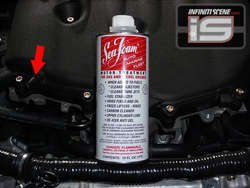
4. REMOVE THIS RUBBER NIPPLE COVER.
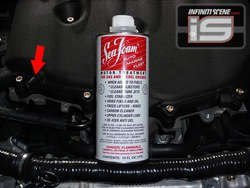
1-14.jpg
5. CONNECT YOUR VACUUM HOSE.
6. RESTART THE CAR.
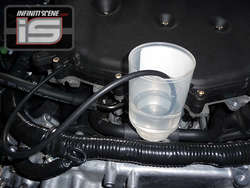
7. HAVE SOMEBODY REV YOUR ENGINE WHILE YOU SUCK UP THE 1/3 OF SEA FOAM, YOUR ENGINE MAY DIE ON YOU, IF SO START THE CAR AND FINISH THE REST OF THE SEA FOAM.
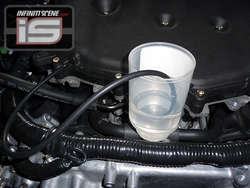
2-12.jpg
8. AFTER YOU SUCK UP ALL 1/3 OF THE SEA FOAM SHUT YOUR CAR OFF AND LET IT SIT FOR 5 MINUTES.
9. REMOVE THE VACUUM LINE AND REPLACE THE RUBBER NIPPLE COVER.
10. AFTER THE 5 MINUTES START YOUR CAR AND MAKE SURE YOU ARE IN A WELL VENTILATED AREA. DEPENDING ON THE AMOUNT OF DEPOSITS REMOVED, THE MORE SMOKE YOU WILL GET.
11. AFTER YOUR CAR IS DONE SMOKING, YOU ARE DONE.
-------------------------------------------------------------------------------------------------------------------------------------------
 

Attachments

  • 1-14.jpg
    1-14.jpg
    44.9 KB · Views: 220
  • 2-12.jpg
    2-12.jpg
    40.4 KB · Views: 292
fxlr8's posts

Here is the vid, the car was smoking for a good 7-10 minutes....I only filmed around 3 minutes.

 
Im gonna try again right b4 my next oil change. this is a much better write up than mine.....:tup:
 
on the bottle they recommend doing this every 3000-5000 miles, not sure if my neighbors would appreciate that.. :shy:
 
is it safe on Stillen S/C?

sure is

Sea Foam said:
I have a Turbocharger (or Supercharger) on my engine. Can Sea Foam still be used in my oil?

The high heat generated by turbochargers and superchargers can cause your oil to deteriorate more rapidly than normal, leaving behind more residue that needs to be cleaned from your oil system. Sea Foam is very beneficial in these applications, first, because it helps to clean these deposits, and secondly, because it is a very high-temperature tolerant oil blend, better able to tolerate these extreme conditions.
 
I'll give it a try at next Oil Change. I'm also gonna do a Oil Filter relocation mod. The Fumoto Valve seems to be complete waist if you get the oil from the filter all over the place.
 
did the seafoam today....did the gas tank and intake but not the crank case because I just changed my oil 500 miles ago...

however, even though I ave 57xxx miles on the FX there was only literally about one minutes of smoke, after than there were no visible exhaust fumes..... I drove it around for like 20 minutes afterward as well.

immediate results:
I actually felt a tiny bit of a smoother idle/shifting.....but thats pretty much it. my exhaust smelled horrible after the 20 minute drive though lol.....

what I did with the extra 5oz:

lit it on fire.
 
Doin the SeaFoam this afternoon! Impulse buy at the auto parts store. They got me! It's workinnnnnn oh yeah, it's workinnnnnnn.

I took apart my intake and cleaned it out by hand a couple weeks ago. Guess this should finish the job. Plan to put it in the fuel tank too, but not the crank case. Oil changed two weeks ago.

Dumped 1/3 of a can into the gas tank along with what I think is about 6 gallons of fuel (based on the computer's DTE number divided by by MPGs). Then uncapped the nipple on the front passenger side of the plenum and sucked up another 1/3 can into the plenum. I sucked it up slowly - if too fast, the engine will stall. After sucking it up, I let it sit for about five minutes, then started up. Definitely some smoke - nothing too heavy. I decided to go ahead and drive around till it stopped smoking, which was less than five minutes. Since I cleaned out the upper plenum and entire intake track a couple weeks ago, I think mine smoked less than most of the testimonials I have read about. Although now I have read more and I am going to try something different next time.

Since I still have 1/3 can remaining, I'm going to do the intake cleaning again. Only this time I'll introduce the Seafoam slowly at first, then very quickly - till the engine stalls out. Also, since I did it from the nipple on the plenum the first time (closer to the front pistons) the second time I'm going to do it through the PCV line on the intake tube (closer to all the rear pistons). Then I'm going to let it sit for a bit longer than five minutes. I'll bet there is more fluid in contact with the dirty surfaces this way and I'll prove my theory correct by getting more smoke than I did the first time.

One thing I read that bothered me - two different people believed that the Seafoam "fouled" up the spark plugs. One person, heard from a mechanic that the resulting smoke can "kill your catalytic converters". Anybody think there is any truth to either one of these claims? My cats are original with 100,000 miles. Just wondering if blowing a bunch of dirty smoke through them might be enough to sap whatever life they have left. I plan on getting HFCs and new plugs soon anyway, so I'm really just interested if anybody knows about any Seafoam negative effect on the cats or spark plugs.
 
Last edited:
So I have to admit, I've been skeptical about Seafoam since I first heard about it. After seeing this thread updated today I did some searching around on the internet and found this thread
http://www.yotatech.com/f123/seafoam-verdict-69490/
where the guy had before and after pictures and must say that I'm really impressed. If anything I suppose your engine will run cleaner and you'll get better gas mileage. I suppose this would mean that it would bring your car back up to stock HP (it's not going to ADD any power to your engine, just restore any that's been lost due to crap buildup)
Looks like I'll be doing this in the near future (have to wait for an oil change) :-)
 
this actually works pretty well, i used it couple times on my last car and the results were really impressive, better performance, the iddle improve and the gas mileage too... i will for sure use it on my FX next time i do the oil change.....
 
Seafoam is a solvent. Don't put it in your crankcase. Gas tank and intake are fine but not in the oil. It destroys your oils ability to lubricate and does not entirely leave when you get the immediate oil change afterwards. Aside from that, good oil (M1) has plenty of detergents. If you think you need an crankcase "cleanse", change your oil more often.

Posted from my BlackBerry using BerryBlab


haha - I guess the manufacturer and thousands of people are wrong. I don't agree with your post. On what are you basing this claim?

Solvent - yes, as are most petroleum products. Does not entirely leave the crankcase - so what? You change oil every 3000 miles anyway. Residual cleaner (tiny amount that remains) will pose no threat. The whole point is to dissolve gunk and sludge that pouring clean oil on top of won't fix. This is a pretty old, tried and true product though there are dissenting opinions out there. At the absolute worst, it does nothing. At best, it does what it claims. The truth is probably somewhere in-between, which would be a positive for anybody out there who wants to use it. There have been ZERO negative effects posted that I can find (and believe).
 
Last edited:
Back
Top